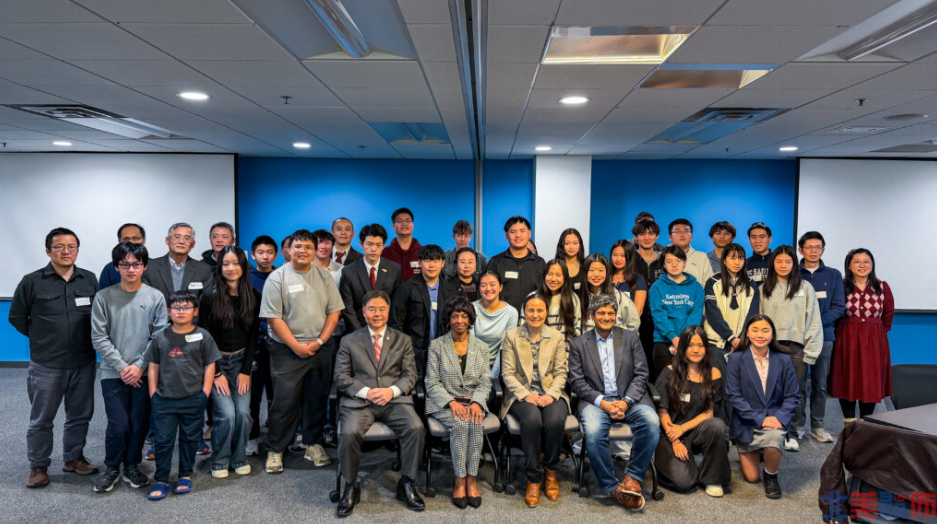

Research Triangle Park, NC – More than 50 youth leaders from across North Carolina gathered for an interactive Youth Leadership Workshop hosted by NC Youth Impact, creating a unique opportunity for students to engage directly with Congressman Ted Lieu and Congresswoman Valerie Foushee on issues shaping the future of their generation.
Designed as a youth-centered civic engagement and policy dialogue program focused on artificial intelligence (AI), the workshop encouraged students to move beyond passive learning and instead actively research, present, question, and participate in structured discussions on today’s most pressing societal challenges.
Over the course of the program, students explored several major themes impacting youth, families, and communities, including:
- AI in Education: Learning Tool or Academic Risk?
- Youth Safety: AI Medical Advice Requires Strong Guardrails
- AI and Employment: Adaptation, Not Replacement
- AI and Democracy: Data Centers and Community Impact
In just three days of preparation, four student teams conducted independent research, developed presentations, and presented their findings to an audience of more than 100 community members. The event was attended by Congressman Ted Lieu, Congresswoman Valerie Foushee, North Carolina State Senator Jay Chaudhuri, State Representative Ya Liu, as well as educators, experts, and community leaders.
Students not only presented their research findings but also engaged directly with policymakers and audience members in interactive discussions and policy-oriented Q&A sessions.


AI in Education: Learning Tool or Academic Risk?
The Gold Team focused on the use of AI in K–12 and higher education, particularly its impact on learning and academic integrity.
Students noted that AI can serve as a powerful learning assistant—helping students understand difficult concepts and generate practice materials. However, they also warned that without clear boundaries, AI may weaken independent thinking and academic honesty.
They proposed a model that frames AI as a “regulated learning partner,” calling for schools to:
- Establish clear usage guidelines
- Encourage AI use for learning and practice
- Restrict misuse that enables cheating
- Strengthen student awareness of academic integrity and consequences
Their proposal emphasized balancing innovation with responsibility in education systems.


Youth Safety: AI Medical Advice Requires Strong Guardrails
The Blue Team examined AI-generated medical and health advice for teenagers, raising concerns about safety and reliability.
Students highlighted that current AI systems are not designed for medical decision-making and may provide inaccurate or harmful guidance. They also referenced real-world cases where individuals were seriously harmed after following incorrect AI-generated advice.
The team proposed establishing:
- Independent certification and monitoring systems for AI health-related tools used by minors
- Strict prohibition of dangerous medication instructions
- Human oversight mechanisms for high-risk scenarios
- Stronger transparency and accountability standards while preserving privacy protections
Lawmakers and experts present noted that the proposal offers a clear policy direction for improving youth protection in the AI era.


AI and Employment: Adaptation, Not Replacement
The Red Team analyzed the evolution of jobs under technological change, examining past, present, and future workforce shifts driven by AI and automation.
Students emphasized that the core challenge is not simply job displacement, but whether young people are prepared for continuous change.
They argued that governments and education systems should:
- Prepare students for multiple career pathways
- Focus on transferable skills such as critical thinking and adaptability
- Strengthen long-term workforce readiness rather than training for single-job roles
Their presentation highlighted the importance of lifelong learning in an AI-driven economy.


AI and Democracy: Data Centers and Community Impact
The Green Team shifted the discussion toward AI infrastructure, focusing on the growing presence of data centers and their impact on local communities.
Students raised concerns about:
- Increased electricity demand and potential rising energy costs
- Water and environmental resource consumption
- Limited direct economic benefits for local residents
They asked whether governments should consider regulatory pauses or stronger oversight mechanisms before approving large-scale AI infrastructure projects.
The team also suggested exploring standardized “good neighbor” policies to ensure that corporate development aligns with community interests.
This presentation sparked an active discussion on balancing technological progress with local governance and public accountability.

Students Present in Three Days: Rapid Research and Civic Engagement
The workshop was moderated by Jake Xu and Sunny Zhao (NC Youth Impact co-founders). At the opening of the event, project advisor Helen Hou reflected on the rapid pace of preparation:
“The project was finalized just last Friday. We sent the instructions to students on Tuesday morning, and within three days they completed their research, built presentations, and stood here today presenting to elected officials. This was not just participation—they truly delivered. I am extremely proud of their ideas, efficiency, and depth of thinking.”
Experts in attendance, including Professor Liu Jingpu from North Carolina State University, along with leaders from the Triangle AI community, actively engaged with students by asking questions, offering feedback, and encouraging deeper discussion.
Conclusion: AI Is Not the Future — It Is the Present
From education and youth safety to employment and democratic governance, the workshop highlighted one clear message: artificial intelligence is no longer a distant concept—it is already shaping the daily lives, opportunities, and risks facing young people today.
Through research, presentation, and direct dialogue with policymakers, students demonstrated not only their understanding of emerging technologies, but also their ability to think critically about the policies that will shape their future.
Acknowledgements
NC Youth Impact extends its sincere appreciation to the dedicated organizing team and volunteers who made this Youth Leadership Workshop possible. From coordinating student teams and supporting preparation, to managing event logistics, check-in, hosting, and on-site assistance, the team worked tirelessly behind the scenes to ensure the success of the program.
Their commitment, teamwork, and attention to detail played a vital role in creating a meaningful and well-organized platform for youth civic engagement and policy dialogue.


Related coverage from medias:
北卡讲座 聚焦AI运用或波及弱势族群 by World Journal
国会议员刘云平联袂北卡3位“第一”,畅论AI大势及移民热点问题 by The North America Release
聚焦AI与职场、移民、教育与青年公共参与 美国北卡三角区举行“炉边对话与青年领导力工作坊” by Chinese Headline New Media